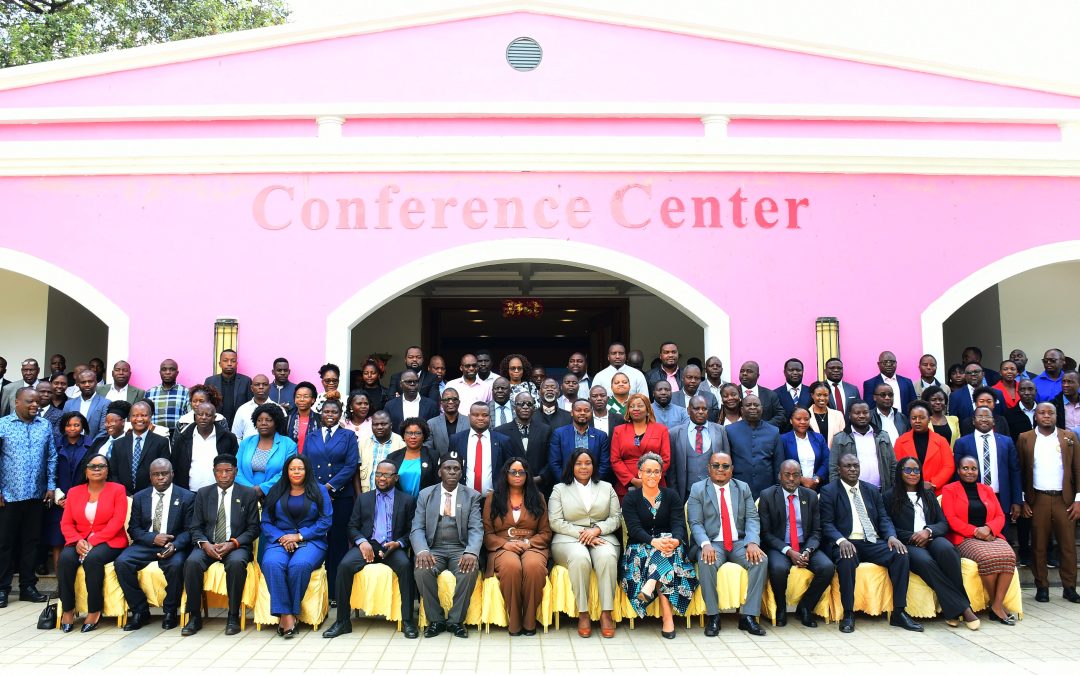
Government, Development Partners, Civil Society Organizations (CSOs), Water Boards, academia, the private sector and local government representatives reaffirmed their commitment to strengthening financing, governance and partnerships in Malawi’s Water, Sanitation and Hygiene (WASH) sector during the opening of the 2026 WASH Joint Sector Review (JSR) in Lilongwe.
Held under the theme “Reimagining WASH Financing: Ensuring Inclusive, Gender-Sensitive Services for All,” the two-day review brought together sector stakeholders to reflect on progress made during the 2025-26 financial year, assess challenges affecting service delivery, and agree on strategic priorities for the coming year in pursuit of Sustainable Development Goal 6 and the aspirations of Malawi 2063.
Officially opening the review, the Minister of Agriculture, Irrigation and Water Development, Honourable Roza Fatch Mbilizi, MP, described the Joint Sector Review as an important platform for reflection, learning and collective action towards improving WASH service delivery across the country.
She reminded delegates that access to safe water, sanitation and hygiene remains central to Malawi’s socio-economic development.
“Access to safe water, sanitation, and hygiene is not a luxury; it is a fundamental human right and a critical determinant of public health, economic productivity, and human dignity,” she said.
While acknowledging progress made in expanding access to WASH services, the Minister cautioned that Malawi remains off track to achieve universal access by 2030. She noted that limited financing, rapid population growth, urbanisation, climate change and ageing infrastructure continue to constrain progress.
The Minister further observed that the WASH sector’s share of the national budget declined from 3.35 percent to 1.97 percent during the 2025/26 financial year, underscoring the need for innovative and sustainable financing mechanisms. She explained that this reality inspired this year’s theme and called upon all stakeholders to work together in mobilizing resources and improving service delivery.
She also reaffirmed Government’s commitment to implementing the Presidential WASH Compact, describing it as a landmark initiative that will strengthen institutional coordination, mobilize resources, and accelerate progress towards universal access to WASH services. She appealed to all sector partners to support both its official launch and implementation.
Speaking on behalf of Civil Society Organizations, WESNET Board Chairperson Chandiwira Chisi highlighted the significant contribution that civil society continues to make towards Malawi’s WASH agenda.
Drawing from the 2025 WASH CSO Performance Report, he noted that 25 Civil Society Organizations collectively invested over MWK 40 billion in WASH interventions across 27 districts, supporting water supply infrastructure, sanitation and hygiene promotion, emergency response, research, innovation and systems strengthening initiatives.
Chisi commended Government, Development Partners, communities and implementing organisations for these achievements while calling on CSOs to strengthen reporting and accountability.
He said: “The annual CSO Performance Report continues to demonstrate the significant contribution that civil society is making towards national WASH goals. However, many organisations implementing WASH activities are still not consistently reporting their interventions and investments. This limits our ability to accurately measure sector progress, strengthen coordination, and effectively advocate for increased financing.”
The WESNET Board Chair also expressed concern over declining investments in WASH despite growing demand for services.
“Financing is the foundation upon which every other sector achievement depends. Without adequate financing, infrastructure cannot be expanded, existing systems cannot be maintained, climate resilience cannot be strengthened, and universal access cannot be achieved,” said Chisi
He further welcomed the advancement of the Presidential WASH Compact, describing it as a unique opportunity to elevate WASH from a sector concern to a national development priority. However, he emphasised that the success of the Compact would depend on sustained political commitment, adequate financing, effective coordination, strong monitoring systems and meaningful participation by communities and civil society.
Representing development partners, UNICEF representative Dr. Penelope Campbell reaffirmed the commitment of development partners to supporting Government in strengthening sustainable, inclusive and climate-resilient WASH services.
She observed that while Malawi has made encouraging progress in expanding WASH infrastructure, the focus must now shift towards ensuring that investments result in services that are reliable, resilient, and sustainable.
She said: “Our task is no longer only to build more infrastructure. It is to ensure that every investment translates into services that last, services that are safe, inclusive, gender-sensitive, climate-resilient, well-managed and accountable to the people they are intended to serve.”
Campbell further emphasised that addressing Malawi’s WASH financing gap requires not only increased investment but also improved efficiency, stronger coordination and financing that is aligned with national priorities.
She said: “Closing the WASH gap will require not only more financing, but also better financing, financing that is predictable, coordinated, efficiently used and aligned behind national priorities.”
She also welcomed the approval of the Presidential WASH Compact and Executive Order No. 2 on Sanitation and Hygiene, describing both as significant milestones that will strengthen sector governance, improve accountability and accelerate progress towards achieving universal access to WASH services.
The first day of the Joint Sector Review featured presentations on sector performance, financing trends, policy reforms and institutional performance, providing stakeholders with an opportunity to reflect on achievements, identify implementation bottlenecks, and propose solutions for strengthening service delivery.
The review continues with technical discussions and validation of sector priorities, culminating in a set of undertakings that will guide implementation during the 2026/27 financial year.
As the national umbrella body for Civil Society Organizations working in the WASH sector, WESNET remains committed to promoting evidence-based advocacy, strengthening accountability, supporting knowledge sharing and fostering partnerships that contribute to sustainable, equitable and climate-resilient WASH services for every Malawian.
